 AI
AI
The Orchestration Bottleneck
Spinning up 10 or 100 agents is trivial. The problem is the engineer trying to manage them all.
“But it won’t actually work.” — Ido Salomon
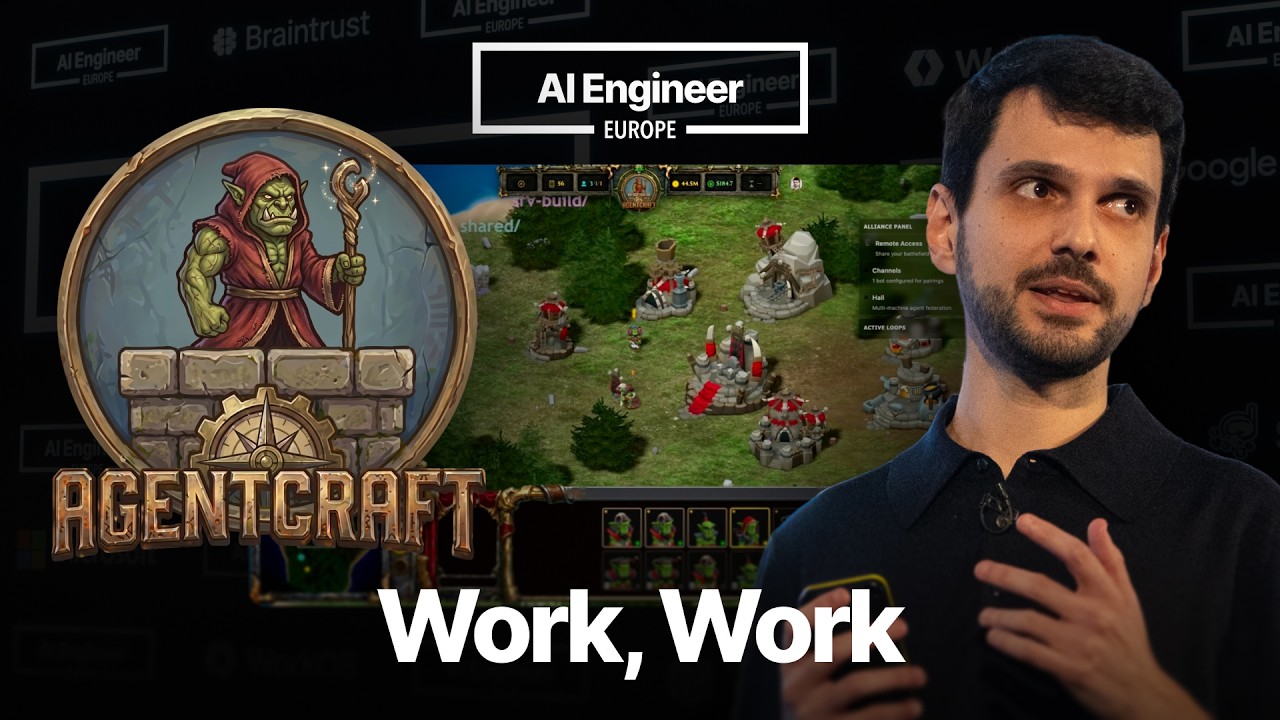
That is Salomon’s verdict on the naive approach. Managing dozens of parallel workers is not a typical engineering job, but it is a familiar one if you grew up playing real-time strategy games. He built AgentCraft on that intuition: borrow the mental models gamers already have for commanding large numbers of units and apply them to coding agents.
Visibility and Reaction Speed
AgentCraft renders your filesystem as a game map. Directories become zones, files become rooms, and each agent appears as a unit moving through them. The AgentCraft filesystem map demo (03:59) shows this live: every file change is logged with which agent made it and when, giving full lineage at a glance.
“I can actually track and see visually what the agent is working on, which file.” — Ido Salomon
A heat map layer flags collisions before they happen. When an agent needs a decision, RTS-style hotkeys let the engineer cycle to it, approve a plan or answer a question, and move on in seconds.
Autonomous Campaigns
Visibility helps, but cycling through agents still costs attention. Salomon hit a second limit: keeping 10 ideas active in his head at once burns out fast. His fix was to reverse the flow. He told the agents to generate work items for him, what AgentCraft calls quests. One button press and they handle whatever he has been deferring.
The campaign container walkthrough (06:13) goes further: state a broad goal, spin up a container, and let the campaign orchestrator decompose it. The engineer only touches the plan review and the final PR bundle.
Human-Agent Collaboration Across Teams
Agents still make mistakes, so humans stay in the loop. AgentCraft’s shared workspaces let two people see each other’s agents on the same map. A product designer runs agents on their machine; an engineer picks up mid-session and hands that work directly to their own agents.
A shared chat connects humans and agents together. When an agent announces it is starting on a file, a human can reply that they are already there. The agent reads that before its next action and adjusts, avoiding the collision without any manual coordination.
Notable Quotes
But it won’t actually work. Ido Salomon · ▶ 0:52
I can actually track and see visually what the agent is working on, which file. Ido Salomon · ▶ 4:16
let’s raise the ceiling together. Ido Salomon · ▶ 10:59
Key Takeaways
- Parallel agents fail without orchestration: visibility and fast reaction cycles are the missing layer.
- Campaigns shift humans from constant babysitting to reviewing finished work in bundled PR diffs.
- Shared workspaces let agents pick up mid-session from a teammate’s agent, not just from their own.