 AI
AI
Why All-in-One Productivity Apps Keep Failing
Kitze has been building productivity tools since he was 10 years old. Toodo (2017) auto-prioritized tasks by tag weight. Better added habits and planner events. Benji, started in 2022, tried to combine all of them. Four years later it still hasn’t shipped. Someone took one Benji idea (photo-based calorie tracking) and made millions. Kitze had 60 features. The real problem was never features. It was the friction of filling out forms to feed a life OS, and more surface area doesn’t fix that.
Early Voice-to-Agent Experiments
When ChatGPT plugins launched, Kitze called his wife and declared all SaaS dead. Nothing changed. But in 2023, before models could reliably return JSON, he added a keyboard shortcut to Benji: press a key, speak, and the Benji keyboard-triggered voice demo (04:59) shows what happened. Benji cut the speech into chunks, called its own internal APIs, and updated calendar entries and to-dos in real time. It went viral. He did nothing with it. The gap between “this is obviously the future” and “shipping something” ran straight through his ADHD.
The OpenClaw Phase and Its Limits
Peter’s Cloudbot (OpenClaw) was the unlock: talk to an AI agent through WhatsApp or Telegram. Kitze joined the Discord when it had fewer than 100 users, self-hosted everything, switched back to Android so his agent could read and clear notifications, and built a fleet of specialized bots, one per life domain. Then the crash. Five Discords, hundreds of channels, and cron jobs that forget what they were doing mid-conversation. As he put it:
“one-on-one chat with one agent sucks”
Discord and Telegram were built for humans talking to humans. Forcing them into a life OS is a workaround, not a solution.
Two Futures, Both Unsatisfying
Two camps are competing. Custom tinkerer agents (OpenClaw, Hermes) give power users full control but require constant maintenance. Even dedicated tinkerers in Kitze’s Tinkerer Club are burning out. Cloud agents (Cowork, OpenAI’s offering) work out of the box but run at maybe 5% of OpenClaw’s capability. Power users find them neutered. Tinkerer tools always require too much setup for busy people who just want results. Cloud agents are too restricted for anyone who wants to own their data, their models, and their memory.
Building Wolffer: A Purpose-Built Agent UI
Kitze built a personal experiment called Wolffer. It skips vector memory. Each conversation topic carries a description, and opening a nested topic (say, “Work / Benji / Customer Support”) automatically injects all parent descriptions into the first prompt. The agent knows your work context, your product, and your support workflow without pulling from a memory store. Wolffer also shows tool calls in collapsible UI blocks, labels cron-triggered messages, and lets you manage each agent’s capabilities from a sidebar. It currently runs only on Codex and is not built for public release.
The Inversion: AI Prompts You
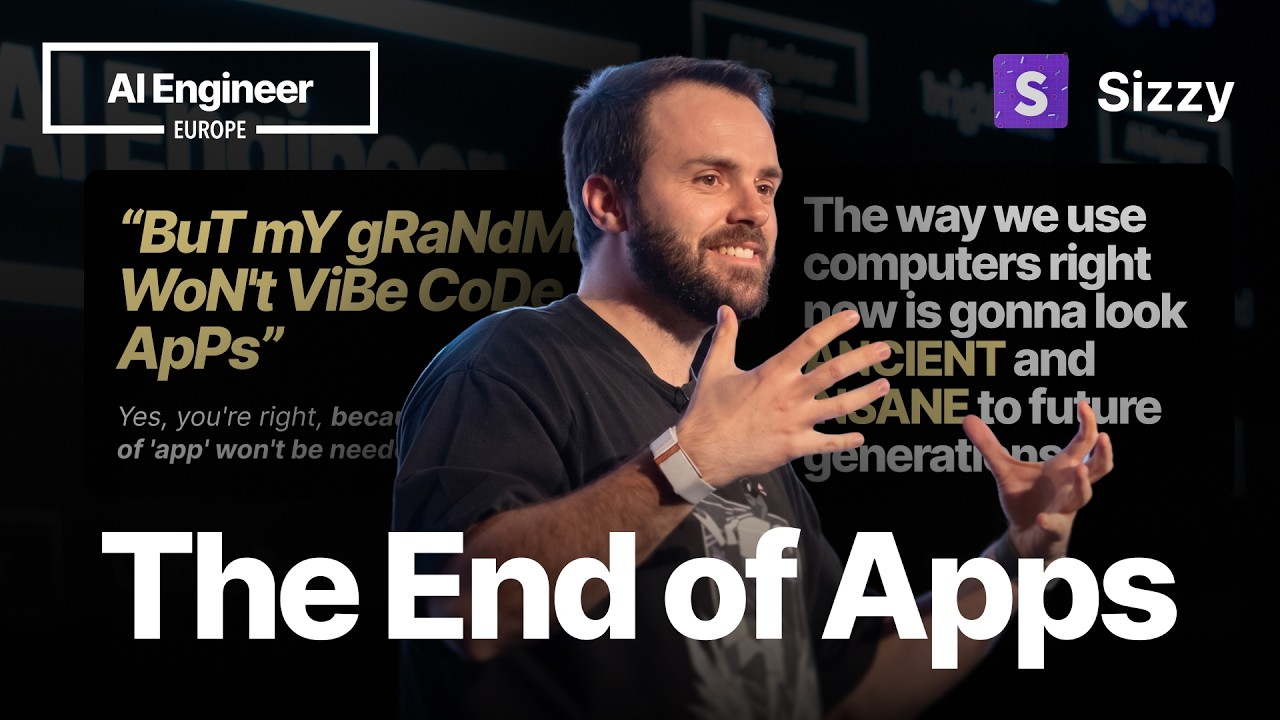
Opening a laptop to 17 app updates and yesterday’s tabs is not how computers should work. Kitze’s prediction: the prompting relationship inverts. Instead of you typing requests to an AI, the AI ingests your notifications, emails, and to-dos, then queues tasks and asks you for decisions. As he put it:
“the fully productive people will be the one who delegate 99% of the stuff”
Most consumer apps disappear in this model. Specialists (color graders, music producers) keep their tools. Everyone else gets a local agent, possibly Siri with full tool access, generating UI on the fly as tasks require it.
Notable Quotes
I don’t know how the internals of my setup work. I just ask Kitze · ▶ 6:56
one-on-one chat with one agent sucks Kitze · ▶ 9:34
the fully productive people will be the one who delegate 99% of the stuff Kitze · ▶ 18:27
Key Takeaways
- Combining more features into one app never eliminates the friction of manually entering data.
- Discord and Telegram were not built for a life OS — forcing them into that role is a stopgap.
- The next productivity shift inverts the prompting model: AI queues tasks and humans approve decisions.