 AI
AI
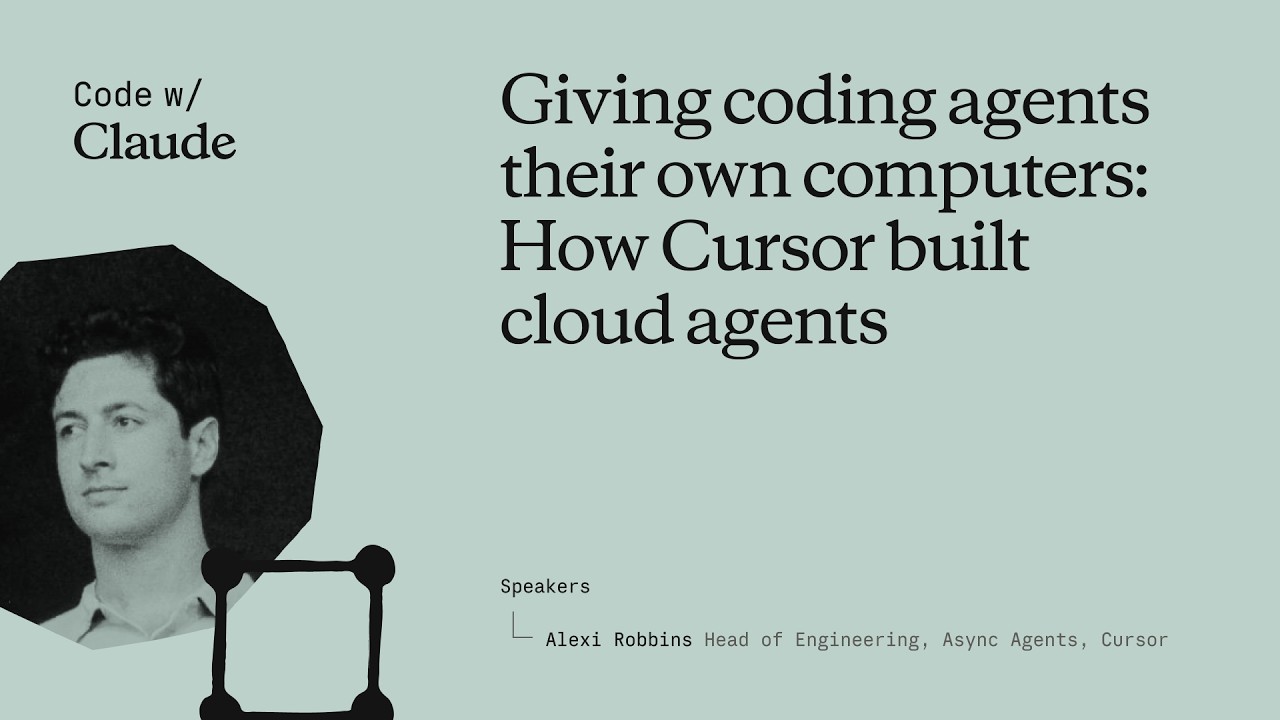
Models Are Ready. Human Setup Is the Bottleneck.
Models are no longer the bottleneck. The limit is humans failing to give agents adequate tools, context, and ambitious tasks. Cursor realized this by comparing human developer onboarding to agent onboarding. A new hire gets a computer, dev environment setup, and extensive documentation. Agents were thrown into codebases blind. From the model’s perspective, thousands of lines of code scroll by with no way to run or test the application. Robbins found it remarkable the system works at all.
Building a Proper Dev Environment for Cloud Agents
cursor.com/onboard is a cloud onboarding agent that scans a repository before making any changes. It figures out how to run the app, identifies environment variables, resolves third-party service dependencies, and asks the developer for anything it needs. Once agents were onboarded, Cursor built an anev CLI that gave them startup tooling a developer gets. Agents could start services, wait for them to come up, check statuses, and create test accounts for third-party services. Better dev environments drove more developers to run more cloud agents.
Computer Use Lets Agents Navigate GUIs Like a Video Game
Computer use is Cursor’s foundational primitive for agent autonomy. Raw pixels come in; mouse and keyboard actions go out. The hard part is not clicking accurately. GUIs are more like video games than chess: an agent sees only a slice of the screen at a time, encounters one-way doors, and can reach game-over states with no backtrack. Claude’s computer use model handles that metacognition. The demo Robbins showed had the model build a private marketplace feature, then record a video walkthrough so developers could review work before reading any code.
The WTF Skill: Agents That Improve Their Own Workflows
Every Cursor cloud agent carries the WTF skill (Work on the Factory). When an agent hits something broken or confusing, it files a report. Those reports accumulate in a central system of record. Humans categorize them: technical failures, missing permissions, and knowledge gaps. One-shot repair does not work because many problems are intermittent. The solving agent spawns a batch of cloud agents with the proposed fix applied, validates across that eval set, then opens a PR for human review.
Notable Quotes
give your agents eyes. So everything Alexi Robbins · ▶ 4:52
for human autonomy is computer use. Um Alexi Robbins · ▶ 5:54
security through freedom which sounds Alexi Robbins · ▶ 8:26
Key Takeaways
- Models are not the bottleneck; the limit is how well humans configure agent environments.
- cursor.com/onboard and the anev CLI give agents the same dev environment setup that human hires get.
- Computer use extends agent automation beyond code to any GUI, handling one-way doors and dead ends.
- The WTF skill turns recurring agent friction into tracked issues, validated fixes, and merged PRs.