 AI
AI
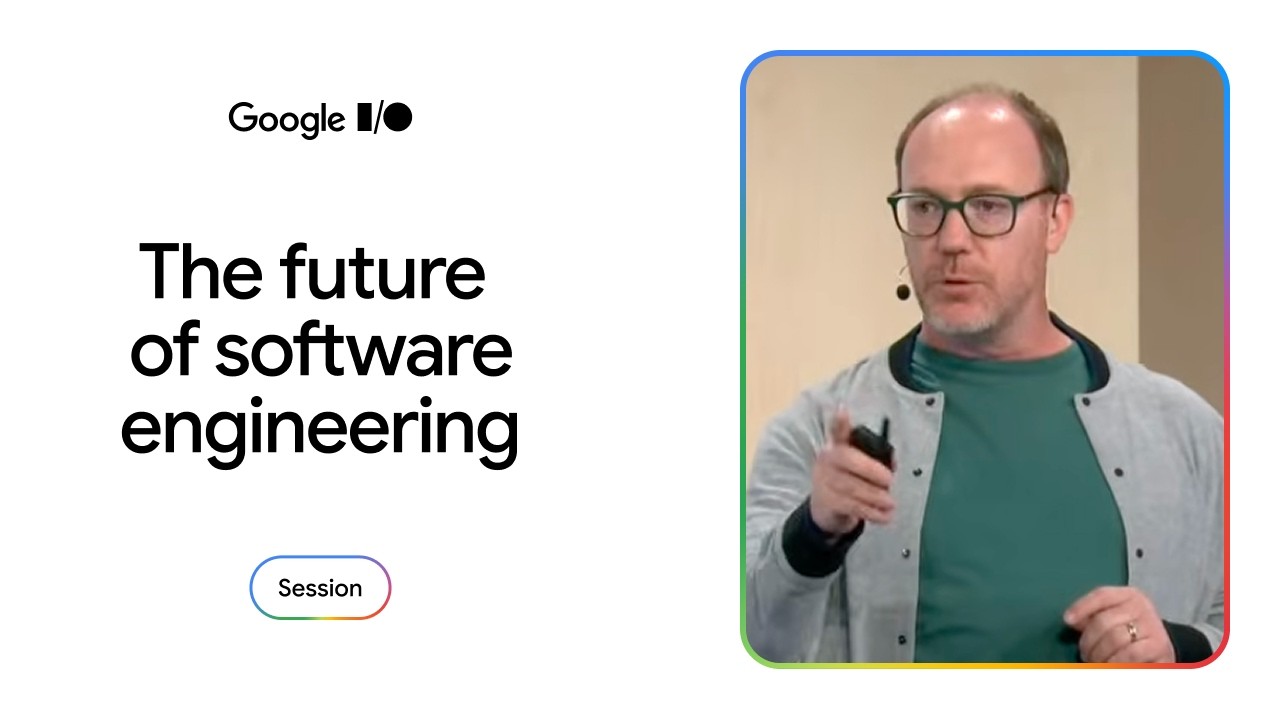
Software Ecology: A Lens for Developer Ecosystems
Adam Bender defined software ecology as the holistic study of the socio-technical ecosystems that produce software. A system is a group of interrelated elements acting under rules. An ecosystem is a dynamic network of interdependent actors that co-evolve with their environment. Developer environments are socio-technical systems combining people and technology. Conway’s law shows organizations build technology mirroring their communication structures. Emergent properties appear only when the whole system is assembled. Understanding this interconnectedness is the foundation for navigating AI-driven change.
Google’s Monorepo and the Power of Shared Fate
Google stores every line of code in one shared repository with trunk-based development. Shared fate means one component can affect everything else. A security patch in one file reaches every application within a week. Ten lines of code in the right place can patch 10 billion lines of system software. This shared fate is both technical and social. It requires a widespread testing culture, a single build platform, standardized code review, and transparency. Large-scale changes have let Google evolve its monorepo for over 15 years. Without LSCs, the company would not be what it is today.
Why 10x Productivity Breaks Current Systems
Bender asked what an AI-first developer ecosystem looks like. He warned that current engineering practices do not work at 10x velocity. More code means more liability. Build times grow. Dependency graphs grow quadratically, not linearly. A 10x larger code base can mean 100x more tests. Version control systems optimized for consistency cannot handle 10x commit velocity. Code review becomes a human bottleneck. Token costs scale with usage. Bender said every developer ecosystem on Earth is going through this transformation. The question is what breaks first.
Build, Test, and Release at 10x Scale
Every node in the development pipeline faces pressure at 10x scale. Build systems slow down with more code and more compiles. Testing infrastructure must handle quadratically more tests as dependency graphs expand. Version control systems cannot sustain 10x commit velocity. Integration testing, already difficult, becomes critical. The conjunction of booleans requires all tests to pass. That breaks with a million tests. Release frequency must increase, but rollbacks become harder when changes land faster than defects can be detected. Internal APIs need the same hardening as public ones. Agents do not negotiate.
AI Amplifies, Not Solves
DORA’s 2024 report found that AI acts as an amplifier. Teams with strong fundamentals apply amplification in useful directions. Teams with weak fundamentals get more confusion. AI does not solve decision-making culture, code health, release hygiene, or reliability by default. Bender listed four priorities: infrastructure capacity, validation strategy, isolation between prototype and production code, and abstractions that prevent bad agent choices. Engineering practices change. Principles matter. Understanding why a team tests or releases the way it does is the only way to evolve those processes for 10x velocity.
Intellectual Control in the Agentic Age
Bender said humans have been losing intellectual control over their largest systems for 15 years. Ask a team to draw an architecture diagram and count how many different pictures appear. AI might offer tools to understand whole systems as systems. A continuously updated architectural model could answer what-if questions about capacity shifts or user growth. Bender urged senior engineers to mentor others and share their AI workflows. Tech leads must steer how engineering happens. In a system, everything is connected. Small actions have big consequences. Engineers have more agency than they think.
Notable Quotes
10 lines of code in the right place in the right place can patch 10 billion lines of application and system software. Adam Bender · ▶ Watch (9:39)
Software is a liability. Adam Bender · ▶ Watch (17:03)
engineering is programming integrated over time Adam Bender · ▶ Watch (15:45)
AI doesn’t care where all of that stuff goes, it’s just going to give you more of it. Adam Bender · ▶ Watch (32:44)
If you can see the systems at work, you can look for leverage. You have more agency than you think. Adam Bender · ▶ Watch (39:15)
Key Takeaways
- Software ecology reveals how culture and technology shape developer ecosystems.
- Shared fate in Google’s monorepo lets 10 lines patch 10 billion lines.
- AI amplifies existing fundamentals; weak practices get worse, not better.