 AI
AI
The Fragile Foundation: Healthcare’s Technical Debt
Healthcare infrastructure is an onion—layered, complicated, and prone to tears. At the bottom sit power, buildings, medical equipment, and helicopters. Above that: aging servers, unpatched devices, flat networks, spotty Wi-Fi, and open remote access. Electronic health records, PACS imaging, and billing systems sit on top, all fragile. AI is now being added to this stack. Legacy tech and technical debt are not just pain points; they are embedded in the foundation. Jen Su jokes that “the only zero trust in the building is between IT and clinical staff.”
AI in the Emergency Department: Triage and Diagnosis
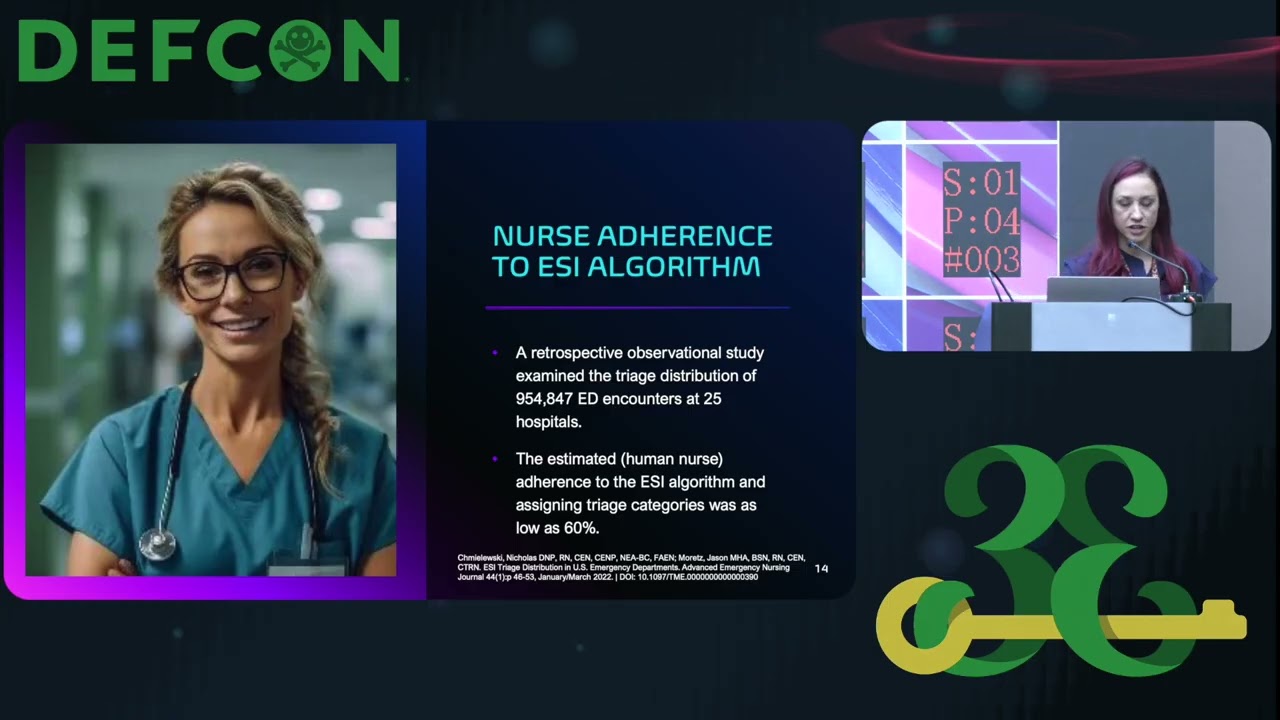
ESI triage is used in 94% of U.S. hospitals and has a benchmark of under five minutes. A study of nearly a million triage encounters found nurse adherence to the ESI algorithm as low as 60%. AI can tighten that gap. Microsoft reports its new AI systems diagnose patients four times more accurately than human doctors in narrow internal use cases. AI also improves risk prediction, hospital admission forecasting, and length-of-stay accuracy. Su emphasizes that AI is not about replacing clinicians—it is about precision support.
AI-Powered Cameras and 3D Modeling in Trauma
AI cameras now analyze video feeds to monitor pulse, breathing, and behavioral escalation in real time. They act as a digital first responder in waiting rooms, pushing alerts through secure APIs into EHRs. In the trauma bay of the future, AI will overlay a 3D model of the human body using vitals, medical history, PACS imaging, and EHR data. It can simulate injury pathways from falls, motor vehicle accidents, and penetrating trauma, highlighting zones of injury and predicting cascading effects.
Humanoid Robots and Healthcare Education
Humanoid robots can fill roles in triage support, behavioral deescalation, non-invasive monitoring, and family presence. China leads with the GR1 on the market; the U.S. follows with Digit, built for mobility. Su estimates humanoid robots could reach hospitals within five years, requiring new HR policies. Meanwhile, AI simulation labs move beyond mannequins—digital twins and personalized feedback let students replay disease progression and test interventions, like scrolling forward and backward through chronic kidney disease stages.
Telemedicine and the Home as a Care Hub
Telemedicine now operates inside the hospital: virtual consults with neurologists or psychiatrists bridge gaps in real time. After discharge, AI-supported coaching manages chronic conditions like diabetes and heart failure. Beam O devices bring hospital-grade monitoring home, tracking vitals and even lung sounds, integrated with the EHR. Smart homes with IoT sensors and predictive tools turn living rooms into clinical extensions. The FDA’s “Home as a Health Care Hub” initiative formalizes this shift.
Ethics, Metrics, and the Call to Action
Powerful tools demand responsible oversight: strong consent models, algorithmic transparency, ethics boards with clinician input, and secure infrastructure. Su ties AI adoption to business metrics: ED throughput, average length of stay, OR efficiency, readmission rates, clean claims, and accreditation targets for trauma, stroke, and STEMI. All affect reimbursement. Her closing poem captures the mission: “Hack with heart, design with care, and leave no patient unaware.”
Notable Quotes
“the only zero trust in the building is between IT and clinical staff.” Jen Su · ▶ 3:54
“nurses adherence to the ESI algorithm was as low as 60%” Jen Su · ▶ 7:48
“Microsoft says its new AI systems diagnose patients four times more accurately than human doctors.” Jen Su · ▶ 8:40
“Hack with heart, design with care, and leave no patient unaware.” Jen Su · ▶ 20:28
Key Takeaways
- ESI triage adherence is 60%; AI can improve consistency and speed.
- Microsoft’s AI diagnoses four times more accurately in narrow tests.
- Digital handoff reports save 15 minutes per nurse shift.
- Humanoid robots may enter hospitals within five years.
- AI adoption must include ethics boards and secure infrastructure.