 AI
AI
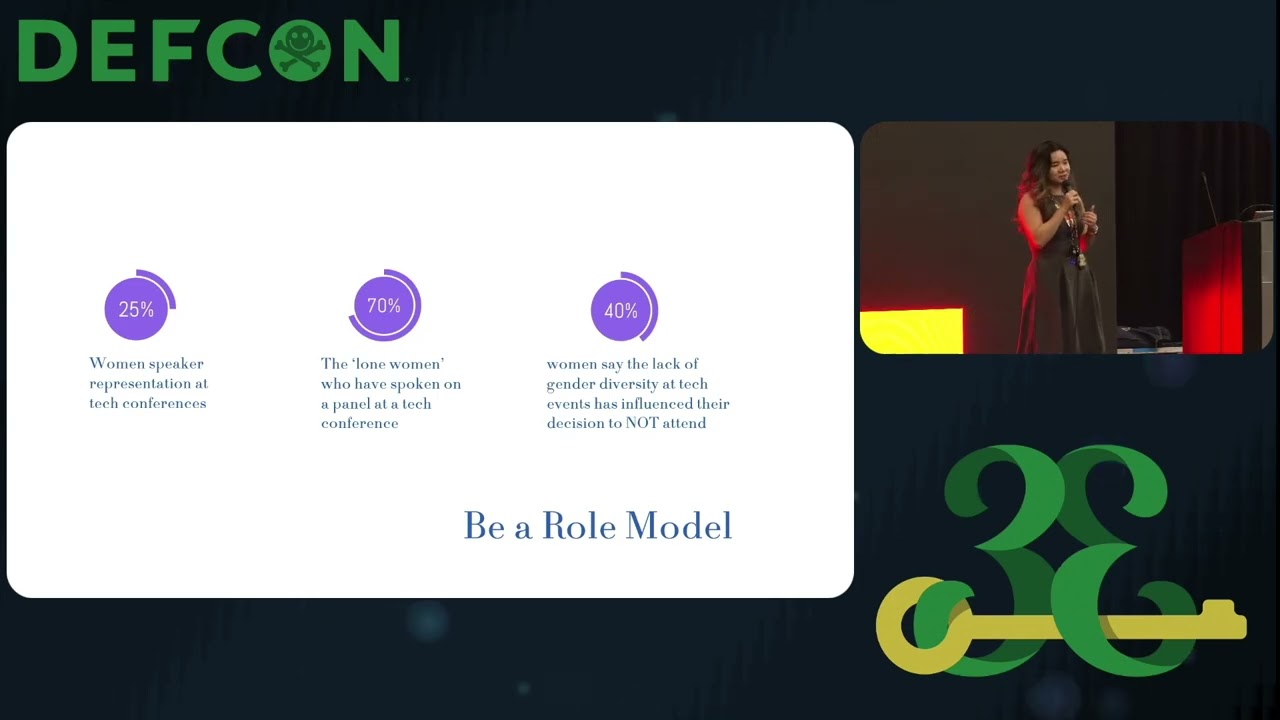
What Holds Speakers Back
Three barriers repeat. Imposter syndrome and low confidence keep people silent when they have something real to say. For parents, especially single parents, conference travel simply does not fit the calendar. And some conferences are not safe environments for women. Fang attended six talks at DEF CON the day she gave this one, and none had a female speaker. She once spoke at a conference where 90% of the lineup were men. Identifying which barrier applies honestly is step one.
Why Conference Speaking Pays Back
Preparing a talk forces deep research. For a consultant who presents to clients regularly, that research builds real technical depth and improves presentation skills. Personal brand and company visibility follow. Opportunities arrive that would not otherwise come. For women, the representation case is concrete: Fang counted six DEF CON talks on the day she gave this one. Zero had a female speaker. Showing up on stage changes that count by one.
Finding Slots and Choosing a Topic
Fang uses papercode.io and sessionize.com to find speaking opportunities, plus dev.event for community programs. The topic does not need to be original research. Fang opened this talk having never broken anything in a professional security context. A 2,000-person conference might put 40 people in a session. If one person takes one idea away, the talk worked. Getting on stage counts. CFP acceptance is only 20% done. Slide prep, rehearsal, and travel budget all follow.
Heart Rate, Nerves, and the Service Mindset
Heart rate spikes 15 to 30 beats per minute above baseline at talk start. It peaks in the first one to two minutes. Fang tracked this in her own data and shared the graph. Talking too fast is the visible symptom. The fix: slow down deliberately. Then shift focus. Ask how to serve the people in the room. Fang calls this a “mindset of service.” Managing heart rate, body language, and mindset together is the actual skill built on stage.
After the First Talk: Feedback and Introvert Strengths
After the first talk, ask the audience directly for feedback on content level and delivery. Fang asks: too basic, too technical, anything to improve? Burnout is real. Fang gave 10 talks in 2024 and experienced it. A support system carrying family responsibilities makes that pace possible. Susan Cain’s book “Quiet” documents zero correlation between being the loudest voice in a room and having the best ideas. Eye contact and direct connection with individuals in the audience are introvert strengths.
Notable Quotes
women we do not feel safe or comfortable Emma Yuan Fang · ▶ 4:08
none of the speakers were female. Emma Yuan Fang · ▶ 7:56
That’s not true. I’m I haven’t break Emma Yuan Fang · ▶ 10:57
mindset of service. You serve people Emma Yuan Fang · ▶ 15:03
Key Takeaways
- CFP acceptance is only 20% of the work; slide prep, rehearsal, and travel budget fill the rest.
- Heart rate spikes 15 to 30 BPM in the first two minutes; shifting to a service mindset brings it down.
- Susan Cain’s “Quiet” documents zero correlation between being the best talker in a room and having the best ideas.
About the Speaker(s)
Emma Yuan Fang is a Senior Security Architect at EPAM, where she leads security strategy and cloud architecture across the UK, Ireland, Switzerland, and Germany regions. She has spent over 10 years in cyber, leading cloud transformation projects and technical workshops on cloud-native application development. Outside work, she advocates for diversity in the security workforce through mentoring and community volunteering. She serves on the leadership team of the WiCyS UK and Ireland affiliate, is a Google Techmakers ambassador, and sits on the Industry Advisory Board at the University of Buckingham.