 AI
AI
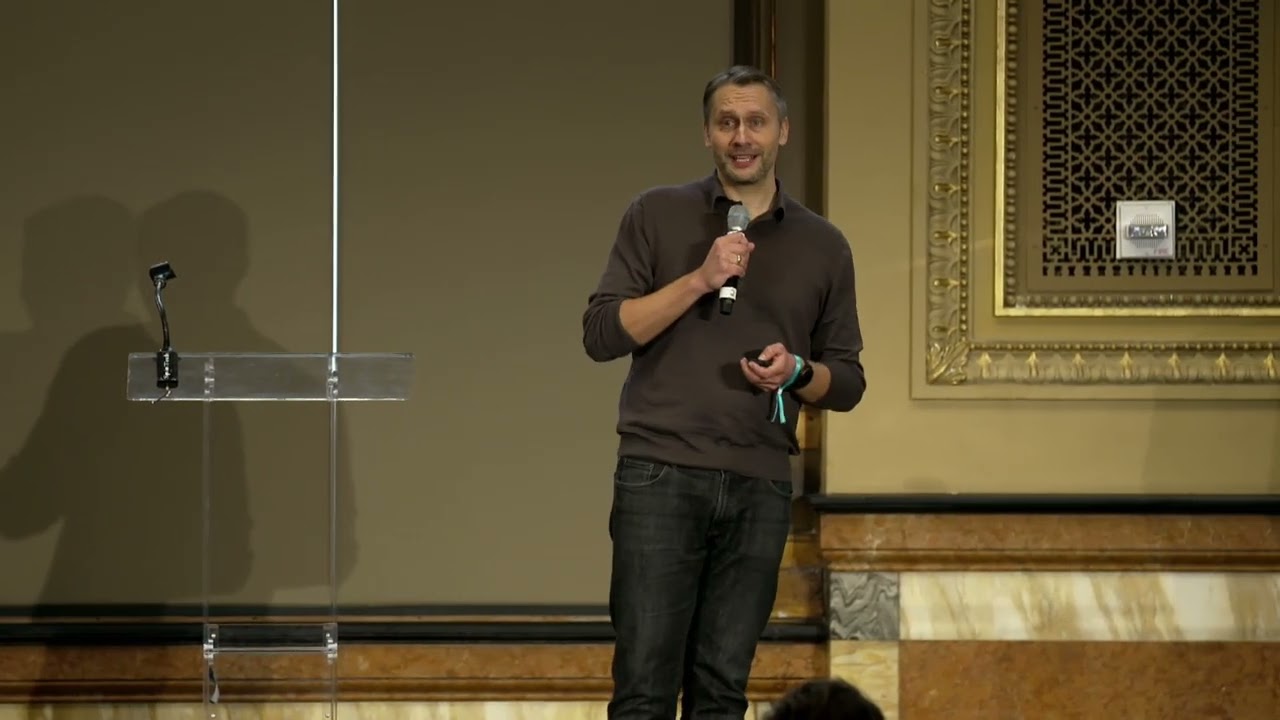
AI-Assisted Attacks Are Faster and Louder
AI is giving attackers faster exploits, faster recon, faster everything. But that same speed is producing
“the most noisy attacks we’ve ever seen.” — Sergej Epp
The faster they move, the more they confess. Every action leaves artifacts in logs. Speed is offense’s gift from AI, and it is also its tell.
AWS Breach in 8 Minutes: What the Logs Revealed
Full admin in 8 minutes. The CloudTrail logs showed a Lambda function hit three times in under 60 seconds, succeeded on the third attempt, then lateral movement attempts using sequential AWS account IDs that matched what LLMs output when asked to generate sample AWS IDs (02:00). Those IDs don’t exist in real AWS environments. The attacker’s tool also left its raw session name in CloudTrail, identifying which AI tool ran the attack (02:25). After the initial burst, 50 minutes of silence. Then another burst. That stop-start cadence, Epp noted, is what LLM-assisted work looks like from the outside: prompt, execute, wait for the next instruction.
Blockchain C2 and AI-Generated Malware
A second sample arrived 24 hours after the ReactForShell exploit went live. The malware shipped with five persistence mechanisms, a local runtime environment, and the ability to patch itself on the fly. The code structure and inline comments pointed to an LLM as the author. To make the campaign unkillable, the operators published their C2 infrastructure on a blockchain. There is no registrar to contact, no way to seize or block it, as shown in the blockchain C2 server that cannot be taken down (05:37). The permanent on-chain record also means every C2 address and payload version is preserved as forensic evidence.
Why Offense Wins on Verifiers — and Where Defense Has the Edge
Offensive tasks have cheap, deterministic verifiers. Pop a shell, run a binary — you know immediately whether it worked.
“Offense has very cheap verifiers.” — Sergej Epp
Defense has a SIEM delivering suspicious events every minute. Sorting real from noise is slow and probabilistic. But attackers carry a blind spot defenders don’t: they have no knowledge of your internal environment. They don’t know your GitHub repos, your naming conventions, or how you’ve structured your accounts. Train on public data and go fast, and the training data shows. The accent gets louder the faster they move.
Four Controls to Exploit the AI Attacker’s Accent
Four controls turn the accent into a detection signal. First, weaponize time: an account from an unknown source performing admin actions within five minutes is a near-certain alert. Second, honey tokens. Set canary identities that match your internal naming conventions — AI enumerates them on the way to real targets. Third, enforce your accent: train your team to recognize when an alert doesn’t follow your repos, account names, or deployment patterns. Attackers trained on public data cannot fake what you built internally. Fourth, build cheap verifiers around those signals. Attempting to assume a nonexistent role is a free detection.
“the attacker AI has definite accent and speed makes it louder” — Sergej Epp
Q&A
Are honey tokens becoming a more important tool for defenders in the AI era, and is Sysdig using them? Yes — Epp confirmed that the most successful vendors already embed honey tokens (including in EDR solutions for enumeration detection), and said AI-driven speed makes them more critical because any attacker trying to stay silent must enumerate the environment first, hitting tokens along the way. ▶ 15:14
How many distinct AI accents have you captured from attackers so far? No count yet — Epp called it an open research question, suggested building controlled environments with multiple models running the same attack to compare outputs, and noted the verifier-space mapping still needs formal mathematical proof. ▶ 16:24
Notable Quotes
the most noisy attacks we’ve ever seen. Sergej Epp · ▶ 0:42
Offense has very cheap verifiers. Sergej Epp · ▶ 7:55
If you pop a shell, if you run a binary, Sergej Epp · ▶ 8:00
Key Takeaways
- Treat AI attacker speed as a detection signal — burst activity and fresh accounts within minutes are high-confidence alerts.
- Deploy honey tokens and canary identities that match your internal naming convention; AI will hit them first.
- Encode your environment’s naming conventions, repo structure, and account patterns as detection rules — attackers trained on public data cannot fake them.