 AI
AI
Taiwan Faces a Digital Isolation Risk Ukraine Never Did
The Taiwan Resilience Project has spent a year examining one core problem: Taiwan is not Ukraine. Russia could not fully isolate Ukraine digitally because Ukraine is a large country with land borders and diffuse infrastructure. Taiwan is an island. Almost all its international connectivity runs through submarine cables. China can attack those cables from both ends, kinetically or through cyber means, in ways Russia never could against Ukraine. That asymmetry makes total digital isolation a real scenario, not a theoretical one.
Mesh Networks and Ham Radios as Backup Infrastructure
When centralized infrastructure fails, Taiwan needs distributed alternatives already deployed and understood by ordinary citizens. The war games produced two practical recommendations. First, distribute Raspberry Pi mesh nodes and ham radios throughout the population and train people to use them now. Taiwan already has an active ham radio community that handles disaster relief. Second, the island needs stockpiled critical components such as transformers and power equipment, because a blockaded island cannot import replacement parts after the shooting starts.
Fourteen Cables, Multiple Attack Vectors
Taiwan has about 14 active submarine cables, with plans to reach 19. Roughly half connect to mainland China; those go dark the moment conflict starts. The other half terminate on Taiwan’s eastern shore and are vulnerable on multiple levels. The cables themselves can be cut or crushed. Repeater boxes sitting underwater need 8,000 to 18,000 volts of power run through the cable from shore. Beach-side switching centers, many built with Huawei equipment, are exposed to cyber attack before a single shot is fired.
The OneWeb Deal and Lessons from Ukraine
Proliferated LEO satellites gave Ukraine a communications lifeline that survived Russian attempts at isolation. Taiwan took that lesson seriously. The island already had its own limited satellite communications capability, but not a proliferated LEO network. Taiwan signed a deal with OneWeb, a European company, to deploy terminals that now support both civilian disaster response and potential military use. Taiwan also secured an agreement with Astronis, a US company, for medium-earth-orbit satellites. Those systems are deployed and operational.
Three Distinct Communication Problems
Ryder framed the communications challenge as three distinct problems, not one. First: international communication, keeping Taiwan connected to the outside world. Second: internal command and control, maintaining C2 between government and military. Third: keeping the population informed so civilians do not panic or accept a false narrative during a blackout. Ham radios and LoRa mesh networks address the third problem directly. Losing that population layer is how disinformation fills the gap, which is why civilian communications capacity matters as much as military C2.
Q&A
What did the Taiwan Resilience Project learn from Ukraine’s experience? Taiwan’s key action was securing OneWeb LEO satellite terminals, now deployed for civilian disaster response and potential conflict use. ▶ 15:44
Does Taiwan have offensive cyber capability? Taiwan has adopted an “active defense” doctrine and recognizes it must do more than purely defend, though operational specifics are not public. ▶ 26:59
Can China jam Taiwan’s ham radio networks? Any single frequency can be jammed, but ham radio operates across the full spectrum; simultaneous jamming of every band would degrade China’s own C2. ▶ 32:52
Notable Quotes
Give the man a cigar. Huawei. Josh Ryder · ▶ 11:47
So they’re under tremendous threat. Jason Vogt · ▶ 25:08
a much tougher nut to crack than Russia Jason Vogt · ▶ 30:07
Key Takeaways
- Taiwan’s 14 submarine cables are its biggest vulnerability; roughly half already terminate in mainland China.
- Huawei switching equipment at cable landing stations creates pre-built cyber attack opportunities for China.
- Distributed communications (ham radios, mesh networks, LEO satellites) must be deployed before conflict begins.
- In conflict, Taiwan faces three separate challenges: international links, military C2, and keeping civilians informed.
About the Speaker(s)
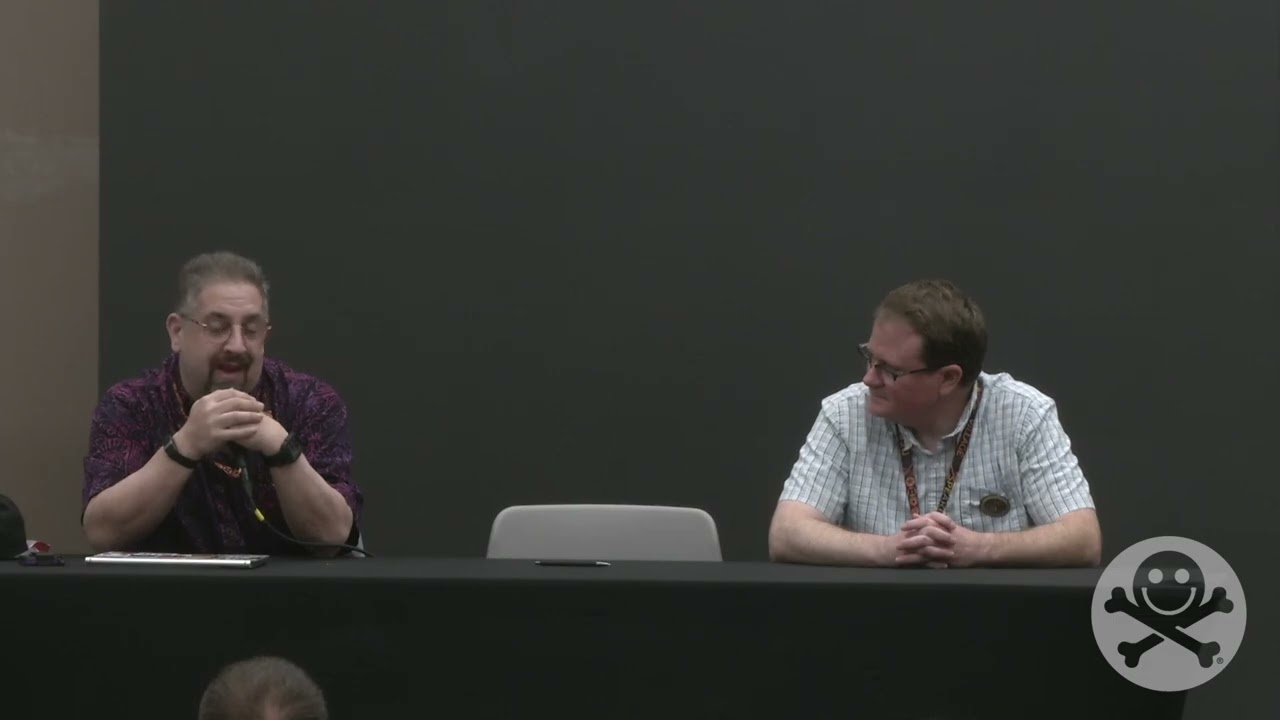
Jason Vogt is an assistant professor in the Strategic and Operational Research Department, Center for Naval Warfare Studies at the United States Naval War College. A cyber warfare and wargaming expert, he has designed multiple wargames at the Naval War College and previously served on active duty as an Army officer.
Shin-Ming Cheng received his B.S. and Ph.D. degrees in computer science and information engineering from National Taiwan University in 2000 and 2007. Since 2022, he serves as Deputy Director-General in the Administration of Cyber Security at Taiwan’s Ministry of Digital Affairs. He is a professor in the Department of Computer Science and Information Engineering at National Taiwan University of Science and Technology, and held a joint research appointment at Academia Sinica’s Research Center for Information Technology Innovation from 2017 to 2022.