 AI
AI
Redefining Seniority in the Age of AI
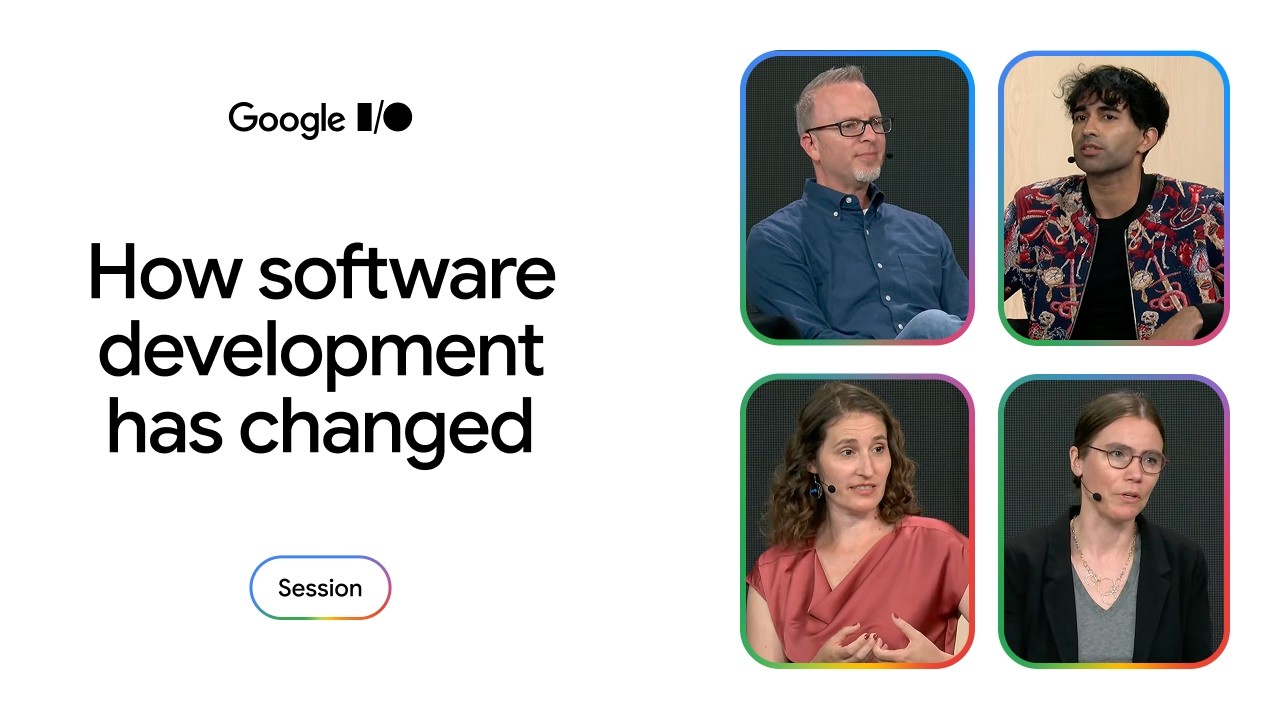
Addy Osmani said seniority used to mean writing code others could not solve. Now it means understanding code that others generate. Ciera Jaspan argued senior engineers still break problems into parts and perform trade-off analysis. The hard part: everyone, including new graduates, needs senior-level skills. Aja Hammerly looks for engineers comfortable with AI who build practices for keeping up. She values people who solve business problems with wisdom.
When Roles Blur Across Teams
Ciera Jaspan described a week where her cross-functional team explored AI tools. The software engineers stopped writing code. They wrote design docs and documentation instead. The UX researchers wrote code. Everyone did junior-level work in other roles and senior-level work in their own. Aja Hammerly added that people with curiosity and diverse talents succeed because AI lets them combine skills in new ways.
Cognitive Surrender and Critical Thinking
Addy Osmani introduced two ideas. Cognitive debt is the erosion of understanding when you defer problem-solving to AI. Cognitive surrender is when you stop thinking and blindly accept whatever the LLM produces. You merge changes without review. You assume the agent will fix problems. Critical thinking disappears. Aja Hammerly said she uses AI as an adversarial mentor, asking it to point out what she missed. The quality of her work improved.
Unlearn Syntax, Master Architecture
Addy Osmani said developers should fall out of love with their IDEs and programming languages. Tuning VS Code for a week no longer matters. Aja Hammerly deskilled on syntax entirely. She learns concepts, reads code, and understands trade-offs without writing the syntax herself. She touches five languages per week. Ciera Jaspan suggested deskilling on anything that causes friction. Let AI handle those parts of the workflow.
Daily Habits That Build Mutual Amplification
Addy Osmani advocates for mutual amplification. Every day, he and his agent both get better. He asks the agent to codify learnings from each session. Ciera Jaspan teaches her agent by asking it to update a markdown file after every mistake. Aja Hammerly treats AI as an adversarial mentor. After every coding session, she asks what she missed, what could be wrong, and what objections exist. Quality improves more than velocity.
From Code to Intent
Aja Hammerly said the shift from code to prompts is an identity shift. Developers must give up control over how the code reaches a solution. They describe the end state instead of the implementation. Ciera Jaspan called it the forcing function that moves developers from programmers to engineers. The code still must be high quality. But quality now includes whether the whole system solves the right problem for users.
Notable Quotes
cognitive surrender where you stop thinking altogether and the answer the LLM gives you is the answer that you just accept Addy Osmani · ▶ Watch (12:19)
the software engineers weren’t writing code. We were all writing design docs and fixing up our documentation and the UX researchers were all writing code Ciera Jaspan · ▶ Watch (5:36)
I treat any of the AIs that I’m interacting with, whether it’s in docs, whether it’s in anti-gravity, whether it’s uh gemini.google.com, I treat all of those as an adversarial mentor Aja Hammerly · ▶ Watch (27:24)
there is a difference between feeling busy and actually being productive Addy Osmani · ▶ Watch (44:25)
this is maybe going to be the forcing function that’s going to take us from being programmers to being engineers Ciera Jaspan · ▶ Watch (37:53)
Key Takeaways
- Seniority now means understanding AI-generated code, not just writing code.
- Teach your agent by logging mistakes and learnings into a markdown file.
- Treat AI as an adversarial mentor that critiques your work before you ship.